
Cat Dash: Cute Cat Music Game
AMANOTES PTE. LTD.Arcade
4.855.00 Reviews
- Version
- 2.0.64
- Installs
- 500.00K
- Age Rating
- Everyone
Screenshots

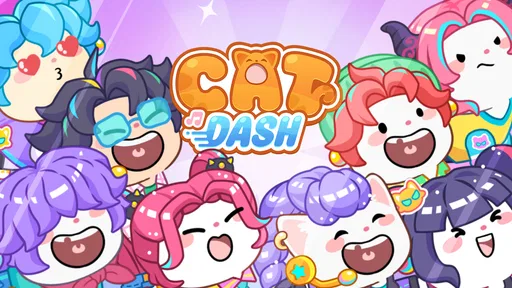

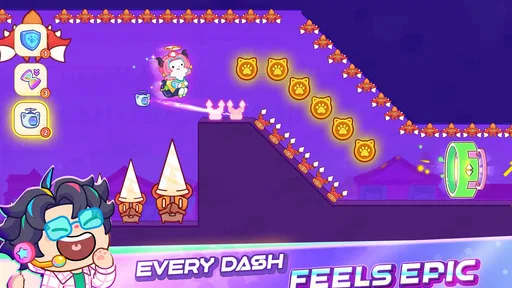
Our Review of Cat Dash: Cute Cat Music Game
 Analysis by Appyee
Cat Dash: Cute Cat Music Game is the kind of arcade game I can understand installing on impulse. It has a friendly cat theme, music-led movement, and a simple promise: jump into a short session, follow the rhythm, and try to keep the run going. After spending time with it, I found that its strongest quality is immediate accessibility. You do not need to learn a complicated control scheme before enjoying the first few attempts.
That easy beginning is important because music platformers live or die by their first few minutes. Cat Dash gets the basic mood right: it feels light, colorful, and designed for quick play rather than a long tutorial. I also appreciate that it is free to download, so trying it costs nothing up front. The game is listed for Everyone, which makes its playful presentation suitable for a broad audience, although younger players should still be guided around optional purchases.
From the first week to the question of staying power
I look at the first week as a test of fit, not proof that a game will stay interesting indefinitely. Short sessions can reveal whether its rhythm-led movement feels rewarding enough to revisit, while a simple personal goal can make those early attempts more revealing than chasing a perfect run. From there, the more useful question is what keeps the routine worthwhile once the newness wears off.
Why the opening sessions work
During the first week, the appeal comes from the combination of timing and movement. The cat is not simply running through a static arcade course; the musical pulse gives each action a sense of purpose. Even when I miss, I usually understand why the attempt went wrong: I reacted late, lost concentration, or failed to stay in step with the changing sequence. That clarity makes restarting feel reasonable instead of irritating.
The game also fits naturally into small gaps in the day. I can imagine playing it while waiting for a bus, taking a short break, or winding down before bed without committing to a story campaign or a long multiplayer match. A typical session can be treated as a handful of attempts. That is a better match for Cat Dash than expecting it to replace a large console-style game.
The cat presentation helps soften failure. Repeating a section in a serious-looking precision game can feel like work, while the cute visual identity gives Cat Dash a more relaxed personality. That does not remove the challenge, but it changes how I respond to it. I am more willing to make one more attempt because the game feels playful rather than demanding.
My practical advice for new players is to listen before trying to play perfectly. On the first few runs, I would focus less on collecting everything and more on recognizing the beat behind the movement. Once the timing becomes familiar, accuracy improves without forcing every action. This is one of the more useful habits in a rhythm platformer, and it makes the early learning curve feel less random.
The role of the music in actual play
The music is not just decoration here. It acts as a second way to read what is happening on screen. When I pay attention to the sound and the visual motion together, upcoming actions feel easier to anticipate. When I stare only at the character, I am more likely to react instead of prepare. That distinction matters in a game built around rhythm: success depends as much on building a steady internal tempo as on tapping quickly.
There is a trade-off, though. Players who prefer silent play, podcasts, or games that can be enjoyed with minimal attention may find the music-led design less convenient. Cat Dash is at its best when the player can give it a little concentration. It is not the right choice for someone looking for a completely passive distraction while doing something else.
What the first-week experience does not prove
A strong first session does not automatically mean the game will remain installed. The novelty of a cute cat and rhythmic movement can carry the opening hours, but long-term value depends on whether the player continues to find a reason to return. For me, the key question is not whether Cat Dash is pleasant at the beginning; it is whether improvement, better timing, and short repeatable sessions remain satisfying after the initial charm settles.
The current release is version 2.0.64, and the game comes from AMANOTES PTE. LTD., a developer associated here with this music-focused arcade experience. That gives the product a clear identity, but it does not change the basic test for longevity. A polished presentation can attract me, while consistent replay value is what earns permanent space on my phone.
Who will get the most from it
I would recommend Cat Dash first to players who enjoy rhythm games but do not want a dense interface or a complicated progression system to understand immediately. It is also a good fit for people who like arcade games built around repeated attempts. If you enjoy noticing small improvements—surviving a little longer, reacting earlier, or finally handling a sequence that previously stopped you—the format has a satisfying loop.
It can also work well for families who want a bright, approachable game with an Everyone age rating. I would still treat the purchase options as a reason for adults to check the device settings before handing it to a child. The game itself is free, while optional items range from $0.99 to $99.99 each, so the distinction between free access and in-game spending is worth keeping in mind.
On the other hand, I would not choose it for someone who wants deep character development, a large strategic system, or a narrative that unfolds over many evenings. Cat Dash is an arcade game first. Its pleasure comes from movement, timing, and repetition, not from building a complex world or managing a long-term team.
How the value changes after the novelty fades
After the first month, I think the game’s value depends heavily on the player’s relationship with repetition. A rhythm platformer can become a compact daily exercise for concentration, but it can also become predictable if the same patterns stop teaching anything new. Cat Dash earns repeat visits when I approach it with a specific goal, such as improving consistency, learning a difficult passage, or completing a short session without careless mistakes.
That suggests a useful monthly routine: do not open it automatically every time you are bored. Instead, give each session a small purpose. One day might be about listening closely to the beat, another about staying calm after a mistake, and another about seeing whether a familiar section now feels automatic. This turns repetition into practice rather than empty looping.
The game’s free entry also makes occasional returns easy. I do not need to justify a purchase before deciding whether it still fits my habits. With over 500 thousand installs and an average rating of 4.8 from around 1.2 thousand ratings, it clearly has an audience that responds well to its central idea. Those figures are encouraging, but they should not be mistaken for a guarantee that every player will enjoy extended sessions. Ratings capture broad satisfaction, while endurance is personal.
Comparing it with other arcade choices
Compared with a standard endless runner, Cat Dash places more emphasis on musical timing than on simply changing lanes or avoiding obstacles as quickly as possible. That makes it a better choice when you want the soundtrack to guide your actions. An endless runner may be easier to play while distracted, whereas Cat Dash rewards active listening and rhythm awareness.
Compared with a traditional rhythm game, it adds a platforming feel rather than presenting music as a sequence of isolated notes or taps. I find that combination more physical and more visually readable, but it may be less appealing to players who want exact score chasing or a highly technical music-game interface. The right alternative depends on whether you want the beat to control the whole experience or simply support an arcade run.
Compared with a large premium game, Cat Dash is much easier to pick up and put down. The trade-off is depth. A paid, content-heavy title may offer more variety, stronger progression, or a richer sense of ownership, while this game’s advantage is its low barrier to entry and quick rhythm-based sessions. I would choose Cat Dash for convenience, not for the feeling of entering a huge adventure.
The maintenance burden of keeping it installed
Cat Dash is not demanding in the emotional sense when it is working for you, but any repeat-focused game creates a small maintenance question: will I still have a reason to open it next week? The answer depends on whether the player enjoys self-improvement. If completing a run is enough once, the game may lose its pull quickly. If improving timing feels rewarding, it can remain a useful short-session habit.
I would keep it installed on a phone used for breaks rather than on a device reserved for large games. Its strongest role is as a compact arcade option that can fill five spare minutes without asking me to remember a story or rebuild a strategy. That role is modest, but it is realistic. Not every game needs to become a daily obsession to be worth keeping.
There is also a financial maintenance issue. The download is free, but optional purchases can make the experience more expensive if a player starts buying repeatedly. I would begin without spending anything, learn whether the basic loop genuinely holds my attention, and only then consider an optional item. The upper end of the listed purchase range is significant enough that impulse spending deserves caution, especially on a shared device.
Storage and attention are also forms of maintenance. A game that is opened once and forgotten still occupies a place in a library and competes with other distractions. My rule would be simple: keep Cat Dash if I return to it because I want to improve, not merely because its icon reminds me of the first enjoyable session.
Where fatigue can appear
The biggest source of fatigue is repetition without a personal target. If I play only to reach an undefined “better” result, failed attempts can begin to blur together. Rhythm games are especially vulnerable to this because the same mistake may recur in a familiar section. The solution is to change the goal, slow down mentally, and treat each attempt as information rather than a verdict.
Another possible friction point is the tension between cute presentation and precision play. The friendly cat theme suggests a relaxed experience, but timing-based movement can still demand focus. A player expecting a purely casual game may be surprised when a cheerful level requires several retries. I think the game works best when its softness is understood as presentation, not as a promise that every section will be effortless.
Music can create fatigue too. A track that feels motivating during the first sessions may become repetitive when heard many times during practice. I would avoid marathon attempts and take a break when I notice myself reacting mechanically. Shorter sessions protect the fun and may improve performance more effectively than forcing another long sequence of retries.
Finally, the purchase structure may affect how comfortable the game feels over time. Free access is convenient, but optional items can introduce a temptation to spend in order to make the experience feel more rewarding. I prefer to decide in advance whether I am willing to buy anything. That boundary keeps the arcade loop from turning into a series of unplanned payments.
Small habits that improve the experience
My first concrete tip is to play with sound whenever possible and use headphones only if they make the beat clearer rather than louder. The goal is timing, not volume. If the music competes with surrounding noise, the game becomes harder for reasons unrelated to skill. A quiet environment can make a short session feel noticeably more controlled.
Second, I would stop after a clean improvement instead of always chasing a perfect run. Ending on a successful attempt gives the next session a clear starting point and prevents frustration from becoming the final memory. This is particularly useful for players who tend to replay one difficult passage until concentration disappears.
Third, I would separate learning from collecting. On an early attempt, follow the route and understand the rhythm. On a later attempt, pay attention to optional pickups or cleaner movement. Trying to master every objective at once makes the screen feel busier and hides the reason for a mistake.
Fourth, I would test the game in the exact situations where I expect to use it. If I want a commute game, I should see whether I can follow the rhythm with normal background noise. If I want a bedtime game, I should check whether the repeated attempts feel calming or keep me too alert. This matters because Cat Dash’s best use case is not universal; it depends on how much attention and sound the moment allows.
My long-term verdict
After the initial novelty fades, I see Cat Dash as a worthwhile small arcade game rather than a permanent main attraction. Its lasting value comes from the relationship between music and movement, the friendliness of its cat-centered presentation, and the convenience of short repeatable sessions. Those qualities are enough to bring me back when I want a focused break, especially if I have a personal improvement goal.
The real test is whether you enjoy practicing timing, not merely admiring the theme. If you do, the game can settle into a useful routine: a few attempts during a break, a quick challenge while waiting, or a light way to sharpen concentration. If you need constant new systems, a long story, or substantial strategic depth, the charm may wear thin and another arcade or rhythm title will serve you better.
With a 4.8 average rating, more than 500 thousand installs, and a free starting price, Cat Dash is easy to try without much commitment. I would keep expectations in the right place: this is not a replacement for a large premium adventure, and its optional purchases mean sensible spending boundaries are important. But as a bright, music-driven arcade game for brief sessions, it has a clear purpose.
My final recommendation is selective but positive. Cat Dash: Cute Cat Music Game deserves a place on your phone if you want approachable rhythm platforming and enjoy improving through repetition. I would skip it if you dislike restarting levels, prefer silent games, or quickly tire of practicing the same timing patterns. For everyone else, it is worth trying free, judging the first week honestly, and keeping only if the beat continues to make you want one more run.
Verdict
Strengths of Cat Dash: Cute Cat Music Game
- Simple one-touch controls make it easy for beginners to start playing.
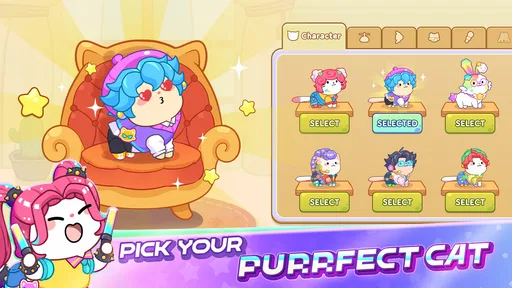
- Cute cat characters and colorful visuals create a cheerful atmosphere.
- Short levels are convenient for quick gaming sessions.
- Music-based gameplay gives each run an energetic, rhythmic feel.
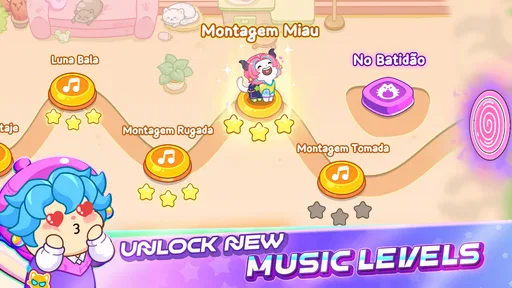
- Unlockable content adds extra motivation beyond the initial stages.
Limitations of Cat Dash: Cute Cat Music Game
- Timing mistakes can feel frustrating when songs become faster.
- Gameplay may become repetitive after extended play sessions.
- Some content may require watching ads or making in-app purchases.
- Small visual elements can be difficult to follow on compact screens.
- The game may need a stable connection for certain features or rewards.
Other Releases by AMANOTES PTE. LTD.
View All
Tiles Hop Music & Ball Game
Music4.3

Magic Tiles 3™ - Piano Game
Music4.6

Dancing Road Color Balls Match
Arcade4.6

Duet Cats: Music & Meow Game
Casual4.4
Similar Picks in This Category
View All
Subway Surfers
SYBO Games4.6

Stickman Party 234 MiniGames
PlayMax Game Studio4.6

Subway Princess Runner
Ivy4.4

Temple Run
Imangi Studios4.2

Zombie Tsunami
Mobigame SAS4.6

Stack Ball - Crash Platforms
CASUAL AZUR GAMES4.5
Frequently Asked Questions
What is Cat Dash: Cute Cat Music Game?
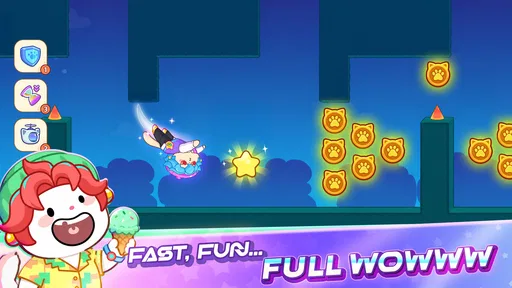
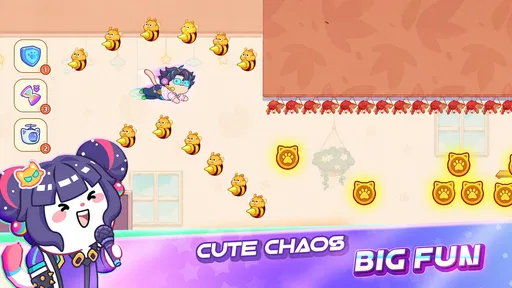
Cat Dash: Cute Cat Music Game is a casual rhythm game in which players guide an adorable cat through colorful stages while matching movements to music. The gameplay is designed to be easy to learn, with tap or swipe-style actions that help the cat avoid obstacles, collect items, and keep moving along each musical track. It is aimed at players who enjoy short, cheerful, and relaxing game sessions.
How do you play Cat Dash: Cute Cat Music Game?
The main objective is to control the cat’s movement in time with the rhythm of the selected song. Depending on the stage, you may need to tap, swipe, or react quickly to incoming obstacles and rewards. Successful timing helps you maintain your progress and achieve higher scores. The controls are simple enough for beginners, although faster songs and more demanding patterns can require practice.
Is Cat Dash: Cute Cat Music Game free to download and play?
Cat Dash: Cute Cat Music Game can generally be downloaded at no initial cost, allowing players to try the core experience without paying upfront. However, the app may include optional in-app purchases, advertisements, or extra content that can improve customization or unlock additional features. Before downloading, it is worth checking the store listing for the current pricing, supported devices, and purchase details.
Does Cat Dash: Cute Cat Music Game require an internet connection?
The need for an internet connection can depend on the version of the game and the feature you are using. Basic gameplay may be available offline after the necessary files have been installed, but advertisements, updates, online rankings, cloud features, or newly added songs may require connectivity. If you plan to play while traveling, test the game offline first and download any available content beforehand.
Is Cat Dash: Cute Cat Music Game suitable for children?
The cute visual style, simple controls, and music-focused gameplay make Cat Dash appealing to children and casual players. Nevertheless, parents should review the app’s age rating, advertising practices, and in-app purchase settings before allowing younger children to play. Some levels may become fast or challenging, and online features or external links can vary by platform, so parental controls are recommended for a safer experience.
Play our best games!


